Reinsurance
Dealer Reinsurance: Why Focusing Only on the Admin Fee Is Costing Dealers Real Money
Most dealers are taught to judge their reinsurance program by one number: the admin fee. But the admin fee is only a small piece of the real cost. Hidden expenses such as ceding fees, CLIP charges, and claims adjudication can quietly drain profit without the dealer ever seeing it. This article breaks down the true cost structure of reinsurance and explains why every dealer should conduct a yearly comparison to ensure they are in the most transparent and profitable program available.
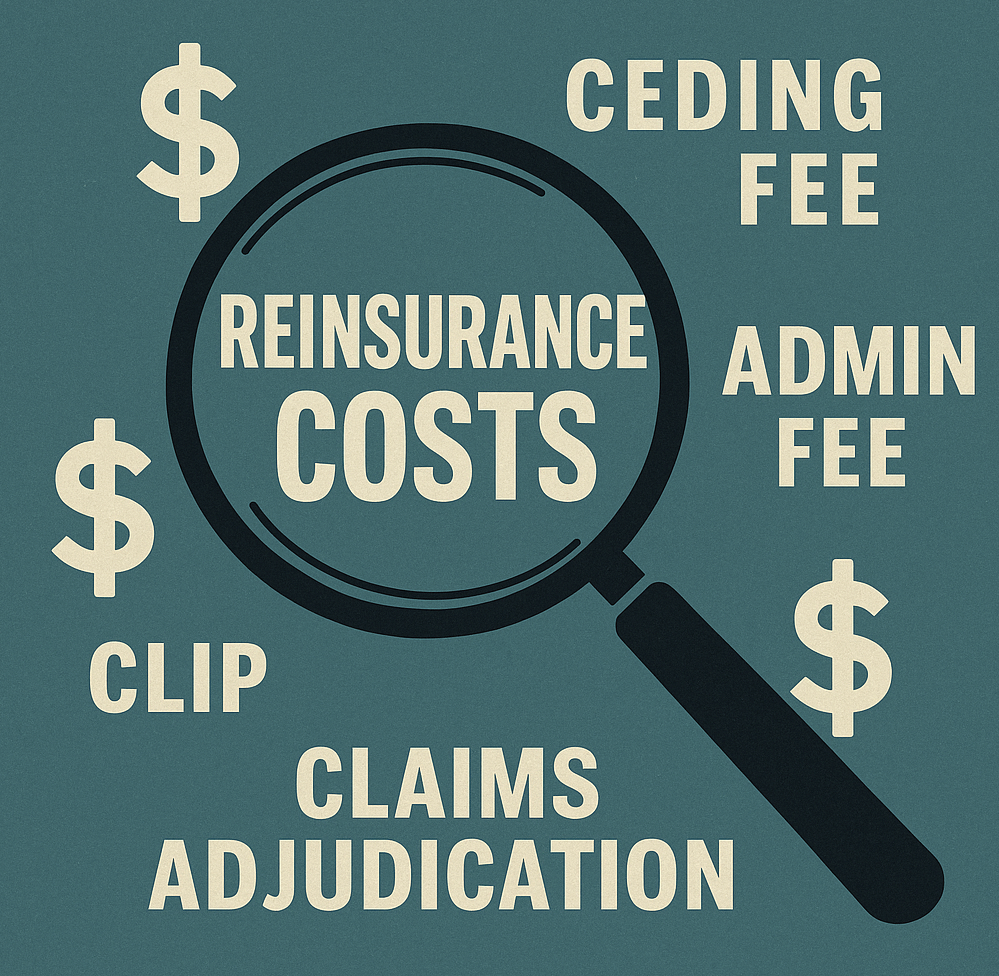
Most dealers who are already in a reinsurance program have been conditioned to evaluate their structure based on one number: the admin fee. That conditioning did not happen by accident. Administrators and agents have spent years anchoring dealers to the idea that the admin fee tells the full story, and that if the admin fee is competitive, the program must be competitive. That assumption has quietly cost dealers enormous profit. The admin fee is only a small part of the overall cost structure in reinsurance, and in many cases, it is not even the cost with the biggest impact on profitability. When dealers focus solely on the admin fee, they overlook the far more meaningful expenses that determine how much premium actually ends up inside their reinsurance company.
An admin fee, at first glance, appears to be a simple flat cost, often somewhere in the low one hundreds to around three hundred dollars per contract. What most dealers do not realize is that this fee can include a variety of other internal expenses, and administrators do not disclose those components consistently. Depending on the provider, the admin fee may consist of or exclude roadside assistance, the CLIP (Contractual Liability Insurance Policy), the agency’s commission or participation, and even premium tax. Some administrators bundle all these items into a single number. Others separate them on the schedule of fees. Some offer partial breakdowns, while others disclose none of these components.
This creates a major challenge. Two companies can both advertise a one hundred eighty dollar admin fee, yet one may be absorbing roadside, CLIP, agency participation, and premium tax inside that fee, while the other charges those same items separately. Without knowing what is actually included, a dealer cannot compare programs in any meaningful way. The admin fee becomes almost useless as a comparison tool.
One of the most misunderstood pieces inside that bundle is the CLIP, the insurance policy that backs every F&I product and ensures claims are paid. CLIP costs are real and unavoidable, and they exist in every program. However, the way these costs appear to the dealer varies dramatically. Some administrators include the CLIP inside the admin fee. Others break it out separately so the dealer can clearly see what portion of the cost is insurance versus administration. Others blend the CLIP into a larger fee without identifying it at all. The CLIP itself is not the issue. The issue is lack of clarity. Dealers who do not know whether their CLIP is included, excluded, or blended cannot calculate true per contract cost.
Beyond the admin fee and CLIP, two major cost categories have a far greater impact on profitability. These are the ceding fee and the claims adjudication fee.
The ceding fee is usually a percentage of the gross premium ceded into the reinsurance company. The more premium the dealership generates, the more this fee grows. Unlike the admin fee, which is fixed, the ceding fee increases with volume and often becomes one of the most significant expenses in the entire structure. Many administrators make this fee difficult to identify. Some list it openly, others rename it, and some hide it inside bundled service charges. A low admin fee provides little benefit if a high ceding fee quietly drains premium on the back end.
Claims adjudication fees create another area of confusion. Administrators may charge a flat dollar amount per claim, a percentage of each claim, or a combination of both. In many programs, these adjudication costs are blended directly into the “claims paid” total on the reinsurance statement. This means a dealer reviewing monthly or quarterly reports sees a single claims figure with no visibility into how much of that number represents actual repair costs versus administrative markup. If a dealer cannot distinguish real claims from administrative padding, there is no way to measure claims performance or identify leakage. Claims leakage is one of the fastest ways to erode a reinsurance company's profitability.
All of this leads to one reality. Many dealers believe they are in a competitive program because the admin fee looks low. In truth, the admin fee represents only a fraction of the total cost. The issue is not any single fee. The real issue is the inconsistency and lack of transparency in how these fees are presented. One administrator may bundle five internal costs into one number. Another may break out all five. Another may hide two inside a ceding fee, and another inside claims paid. Without full disclosure, a dealer cannot perform an apples-to-apples comparison.
Dealers Should Review Their Reinsurance Program Every Year
Every dealer should conduct a competitive comparison of their reinsurance program at least once a year. Reinsurance should not be set up once and forgotten. Programs evolve, fee structures change, new administrators enter the market, and investment opportunities continue to expand. A yearly review ensures that you are still in the best structure for your store and that the fees you are paying align with the value you are receiving.
Modern reinsurance structures allow dealers to invest the A account with greater flexibility than was available years ago. These investment strategies change over time, and new options can create meaningfully better returns. Dealers who never revisit their structure may miss out on improved investment performance simply because they are locked into an outdated arrangement.
A comprehensive annual review should look far beyond the admin fee. Dealers should know their true ceding percentage, understand how claims adjudication fees are being applied, verify whether their CLIP cost is bundled or separate, and compare all of these cost elements to current market options. A simple side-by-side evaluation often reveals that what once appeared competitive no longer is.
The goal of this review is not to switch programs every year. The goal is to confirm that your structure still makes sense, that you understand every fee you are paying, that you are maximizing investment potential, and that you are confident in the transparency and fairness of your program. Dealers who take time each year to validate their structure protect their profit, strengthen their reinsurance company, and ensure that their long-term wealth strategy continues moving in the right direction.
The message is simple. The admin fee is not the entire story. The real story lives underneath, inside the fees most dealers were never trained to ask about. Once a dealer sees the full picture, they understand how wide the gap can be between a program that appears competitive and one that is truly profitable.
Frequently Asked Questions About Dealer Reinsurance Costs
Q1: Why is focusing only on the admin fee a problem in dealer reinsurance?
A: The admin fee is only one part of the total cost in a reinsurance program. Other expenses, such as ceding fees, CLIP costs, roadside assistance, premium tax, and claims adjudication fees, can have a much larger impact on how much premium actually reaches your reinsurance company. When you look only at the admin fee, you may think you are in a competitive program while hidden costs are quietly reducing your profit.
Q2: What other fees should dealers be looking at besides the admin fee?
A: Dealers should pay close attention to the ceding fee, claims adjudication fees, and how the CLIP cost is handled. It is also important to understand whether roadside assistance, agency participation, and premium tax are included inside the admin fee or billed separately. All of these items affect the true per contract cost and the long term performance of the reinsurance company.
Q3: What is the CLIP and why does it matter to my reinsurance program?
A: The CLIP, or Contractual Liability Insurance Policy, is the insurance policy that backs your F&I products and ensures claims are paid. The cost of the CLIP is present in every program, but different administrators show it in different ways. It may be included inside the admin fee, billed as a separate line, or blended into another charge. Knowing exactly how the CLIP cost is treated is essential for an accurate comparison of program costs.
Q4: How often should I review my current reinsurance structure and fees?
A: At a minimum, dealers should review their reinsurance structure and fee schedule once a year. Programs evolve, pricing changes, and new options enter the market. A yearly competitive comparison helps confirm that you are still in the best structure for your store and that you are comfortable with every fee associated with the program.
Q5: Why do investment options in reinsurance matter to dealers?
A: Modern reinsurance structures often allow dealers to invest the A account in different ways. Changes in investment strategies and available options can have a major impact on long term returns. If a dealer never revisits their structure, they may miss out on better investment opportunities and stronger growth inside their reinsurance company.
Q6: How can a transparent side by side comparison help my dealership?
A: A transparent side by side comparison breaks down admin fees, ceding fees, CLIP costs, claims adjudication fees, and other expenses across different programs. This gives you a clear picture of how much premium you are truly retaining, how your investment options compare, and whether your current structure is still the best choice. With that information, you can either renegotiate your existing arrangement or move to a program that better supports your profit and long term wealth strategy.
By Michael Aufmuth